
To address equipment bottlenecks in cement production and solidify a foundation for efficient, energy-saving, and stable production, a delegation from an Indian cement plant recently visited our company's equipment parts manufacturing plant in Yunnan Province for on-site visits and technical discussions. This delegation focused on the performance, customization capabilities, and service support system of core cement production equipment, aiming to select high-quality partners for future cooperation and jointly explore pathways for high-quality development in the industry through a "seeing is believing" approach.
General Manager Guo and key personnel from the technical, production, and after-sales departments of the equipment manufacturing plant warmly received the delegation. Accompanied by General Manager Guo, the delegation first visited the plant's core production workshop, experiencing firsthand the entire process from parts processing to final product delivery. Addressing the high-load, high-wear characteristics of the cement industry, our rotary kiln support rollers are made of high-strength alloy material and undergo six heat treatment processes, extending their service life by 30% compared to industry standards. The cement mill liners utilize a self-developed wear-resistant composite material, reducing energy consumption by approximately 5 kWh per ton of cement. The inspection team, armed with testing tools, verified the equipment's machining precision, sealing performance, and structural stability on-site. They also engaged in in-depth discussions with factory technicians on practical issues such as "how to adapt to the transformation of old production lines" and "equipment protection solutions under extreme operating conditions," creating a lively exchange atmosphere.
After the factory visit, they were invited to our company headquarters in Luoyang for a follow-up meeting to discuss their concerns. The Indian client expressed interest in collaborating on cast iron rollers for roller presses and heat-resistant steel components for rotary kilns. Previously, they had been using domestically produced components with extremely short lifespans, requiring frequent shutdowns for maintenance and significantly disrupting production. This visit demonstrated our factory's professionalism and sincerity, particularly in its investment in equipment customization and after-sales support, perfectly aligning with their requirements for a long-term partner. At the meeting, both parties reached a preliminary consensus on the selection and delivery time of the first batch of equipment components for cooperation, and agreed to arrange for a technical team to conduct dedicated follow-up to expedite the implementation of the cooperation.
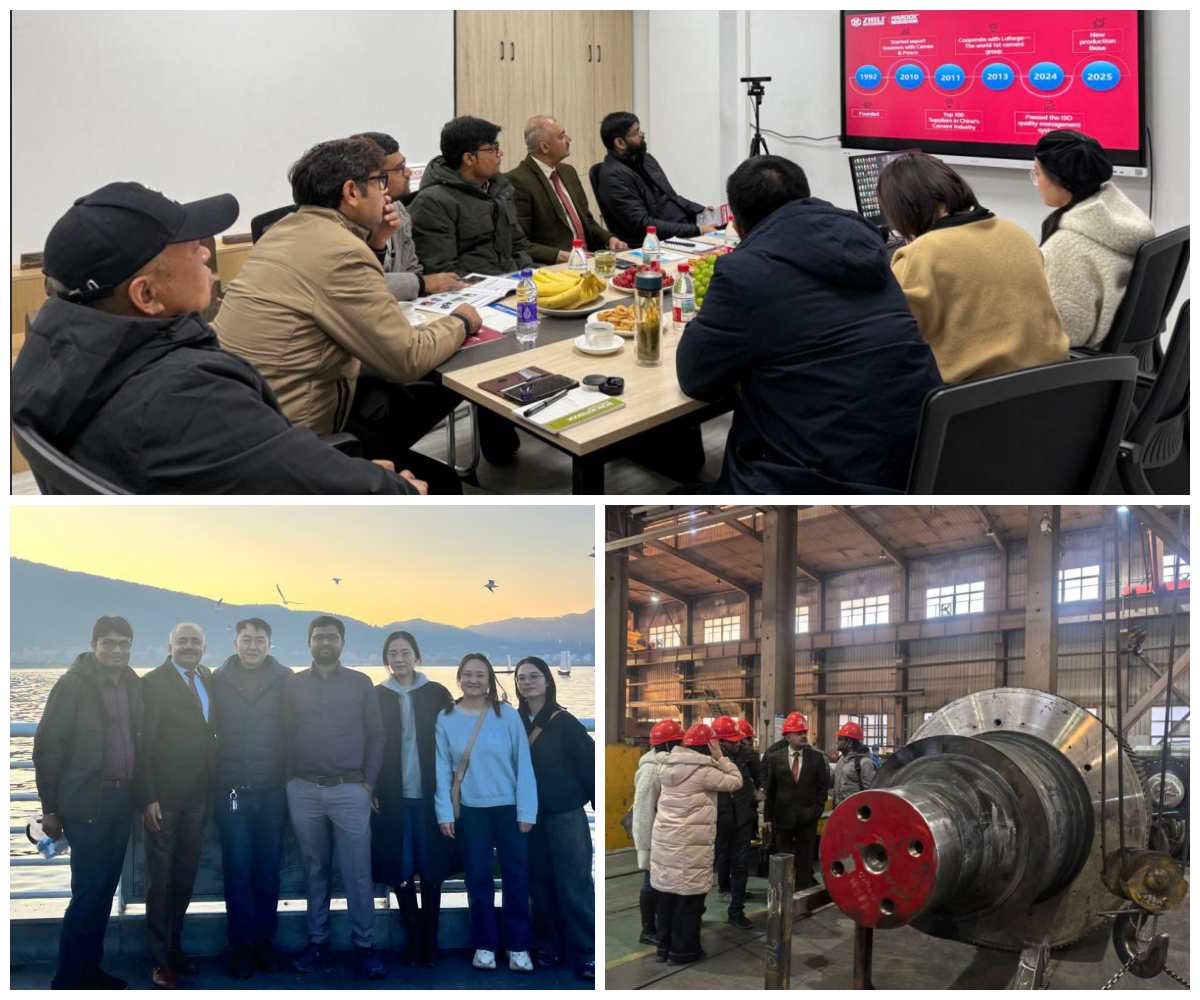
This visit not only provided the cement plant inspection team with a comprehensive understanding of the equipment manufacturing plant's capabilities but also built a bridge for precise communication and in-depth cooperation between the two parties. In the future, both parties will take this visit as a starting point to focus on improving efficiency and reducing energy consumption in cement production. Through technological collaboration and resource complementarity, they will achieve mutual benefit and win-win results, jointly contributing to the green and low-carbon development of the cement industry.

Lear that Our efforts for the local ecology

Learn that how we can make the the products more wear resistant

Help you maximize your business profits

